
Take your first step in developing an outstanding podcast
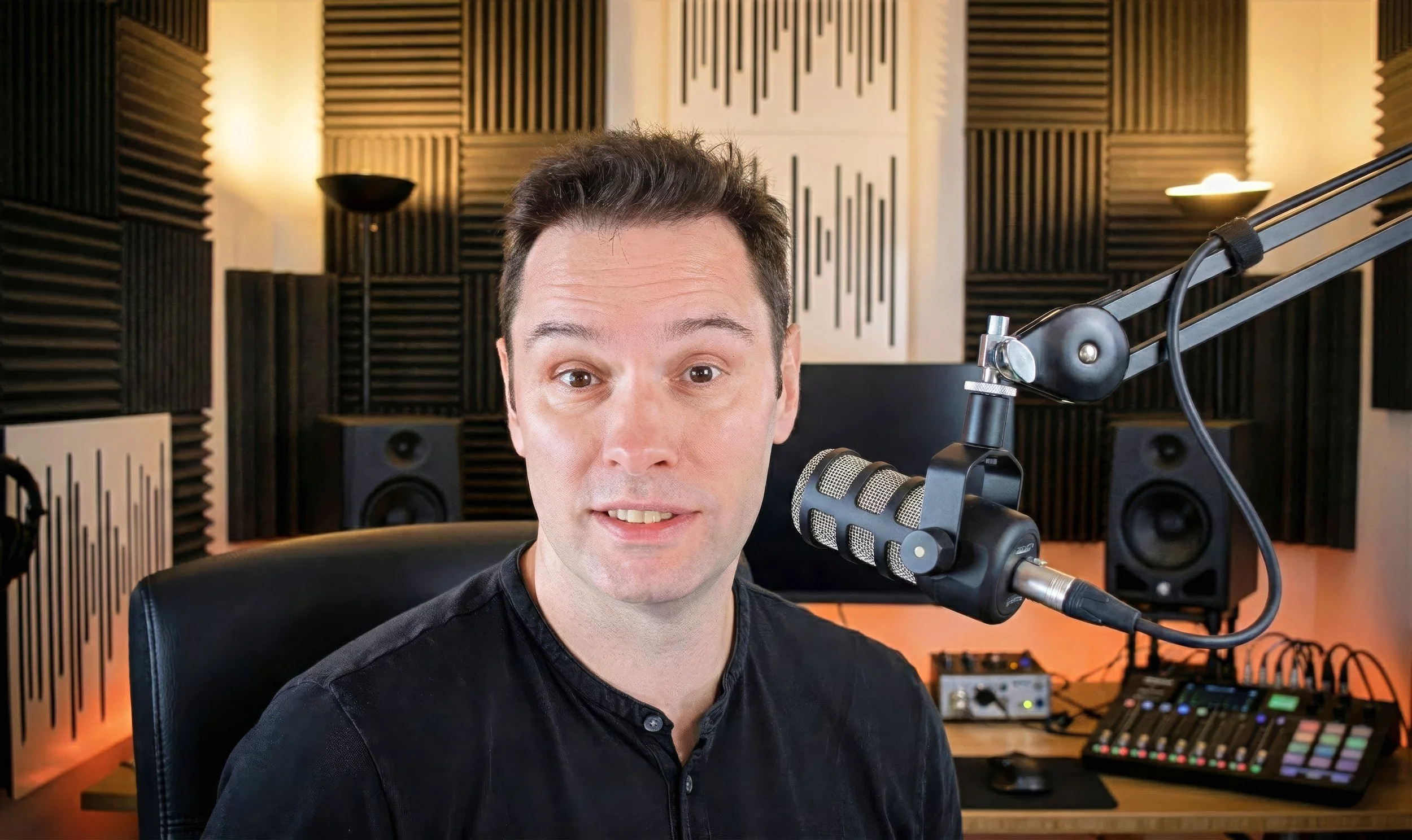
About the Author
Ed Barker has been making content for over 20 years. He established an insanely popular football blog in 2002 and it’s podcast in 2009. He has since recorded and produced more than 1,000 episodes.
Beyond sport, he hosts Sound Investments, a weekly show focused on venture capital, and Showmakers, a podcast dedicated to the craft of podcasting. His client work spans entertainment, business, and social impact.
Ed previously held executive roles in startups and corporates across marketing, strategy, and VC. This mix of operating and creative experience underpins his approach to podcasting as a serious, long-term brand asset.
Ed Barker, Founder, Studio 1878
Introduction
A well-made podcast is one of the few marketing channels where people genuinely want to hear from you. Thirty minutes of attention, on-demand, in someone's ear while they run or commute or cook: no other format offers that.
But most brand podcasts don't get there. They launch with enthusiasm, run for a dozen episodes, then fade because nobody planned beyond "we should do a podcast."
This primer is designed to help you avoid that. It covers what brand podcasting actually is, when it works (and when it doesn't), and how to think about building a show that's worth your time and budget.
It's written for marketers, founders, and business leaders who are considering podcasting but want to understand the commitment before diving in.
Read this first. Then, if podcasting looks like the right move, work through our interactive planning frameworks to start shaping your strategy. When you're ready to go deeper, book a strategy call.

01. What Is Brand Podcasting?
A brand podcast is a show you own. Not an ad placement, not a sponsorship: a media property your company creates and controls.
The best ones don't sound like marketing at all. They sound like something worth listening to. A tech company exploring how decisions get made under pressure. A financial firm interviewing founders about the mistakes that shaped them. A retailer telling the stories behind the people who make their products.
What they have in common: the brand earns attention by being genuinely useful or interesting, not by talking about itself.
This is the core principle. Your podcast should give your audience something they'd seek out even if it weren't attached to your name. Education, insight, entertainment, perspective - something that adds to their day rather than interrupting it.
In return, you get something valuable: a direct relationship with an audience that chooses to spend time with you. No algorithm deciding who sees your work. No rented space on someone else's platform. A show that builds equity over time instead of disappearing after the campaign ends.
It's a long game. Brand podcasts rarely drive immediate sales. What they build is harder to measure and harder to replicate: familiarity, trust, and a reason for people to think of you first.
02. Why Podcasting Works
Most marketing gets ignored. Podcasting is different - people opt in, put headphones on, and give you their attention, often while they're doing something else. That's 30 to 60 minutes with an audience that chose to be there.
The numbers are real: over 500 million people listen to podcasts globally, and the audience skews educated, affluent, and engaged. But reach isn't the point for most brand podcasts. Depth is.
Intimacy at scale
Podcasting is a uniquely personal medium. Listeners hear your voice in their ear while they commute, exercise, or cook. There's no comment section, no distraction. Research consistently shows that most listeners finish most of an episode- a completion rate almost no other content format can match.
That intimacy compounds. Someone who listens to you for an hour a week for six months knows how you think. They trust you before they've ever spoken to you.
You don't need a huge audience
Brand podcasts aren't competing for chart positions. A show with 500 listeners can be extraordinarily valuable if those 500 are the right people - decision-makers in your industry, potential customers, future hires, partners.
This is why podcasting works for B2B, niche markets, and regional businesses. You're not trying to reach everyone. You're trying to build real relationships with a specific audience.
A content engine, not a content piece
One episode becomes a blog post, a newsletter, a dozen social clips, a YouTube video, a quote graphic. Podcasts sit at the top of the content funnel - everything else flows from the conversation you've already had.
And unlike campaigns, the library grows. Episode 50 still gets discovered. The archive becomes an asset that works while you sleep.
Reaching people other channels can't
Some of your best prospects don't read blogs or scroll LinkedIn. But they listen to podcasts on their commute. Audio reaches people in moments when screens don't—and for certain audiences, it's the only channel that gets through.

You need internal buy-in
Someone senior has to believe in this enough to protect it when budgets tighten or priorities shift. Podcasts rarely survive as side projects owned by whoever has spare time. They need a champion and a realistic resource commitment.
You need the right audience
Podcasting works best when your audience already listens to podcasts—or when you're reaching people in contexts where audio makes sense. Not every demographic or buyer profile spends time with the medium. It's worth knowing whether yours does.
Still think podcasting might be right for you?
Work through the Podcast Fit Assessment and our other frameworks to pressure-test your thinking. It takes five minutes and will surface any gaps before you invest further.
If the answer is yes, if you have the patience, the commitment, and the right audience, the next question is what kind of show you're going to make. And that starts with understanding what makes a podcast worth listening to in the first place.
03. Is Podcasting Right For You?
Podcasting works, but not for everyone. Before you go further, it's worth asking whether the conditions for success exist in your situation.
You need something to say
A podcast isn't a container you fill with content - it's a point of view delivered consistently over time. The brands that succeed have genuine expertise, access to interesting people, or a perspective their audience can't easily get elsewhere. If you're not sure what you'd talk about for 50 episodes, that's worth pausing on.
You need patience
Podcasts build slowly. Most shows take 6 to 12 months to find their rhythm and their audience. If your organisation needs results in 90 days, this probably isn't the right channel. The payoff is real, but it's backloaded
You need commitment
A podcast that stops after 15 episodes doesn't just fail to build an audience - it signals that you didn't follow through. The graveyard of abandoned brand podcasts is crowded. Consistency matters more than frequency: a monthly show you sustain beats a weekly show you abandon.

04. The Role of Storytelling
Data informs, but stories stick.
When people hear "storytelling" in a business context, they often think it means adding drama where there isn't any, or forcing a Pixar structure onto a product launch. That's not what we're talking about.
Storytelling is how humans make sense of information. We remember stories long after we forget facts because narrative creates meaning - it tells us why something matters, not just what happened. This isn't a creative flourish. It's how attention and memory actually work.
Why it matters for brand podcasts
Most business podcasts sound like meetings. Two people trading observations, covering topics, saying reasonable things. Informative, maybe. Memorable, rarely.
The shows that cut through have a different quality. They make you feel something. They create tension - a question that needs answering, a problem that needs solving, a change that happened and what it cost. Then they resolve it in a way that leaves you thinking.
This doesn't require dramatic subject matter. A founder talking about a pricing decision can be compelling if you understand what was at stake, what they were afraid of, and what they learned. A supply chain story can be fascinating if you focus on the person who had to make a hard call with incomplete information.
Finding story in the raw material
The skill isn't inventing stories: it's recognising them in what's already there. Every interview has moments where energy shifts, where someone says something unexpected, where the real answer lives underneath the polished one. Learning to hear those moments, and draw them out, is what separates good podcast hosts from people who just ask the next question on their list.
The same applies in the edit. Story structure is often discovered, not planned. You find the shape by listening for the turn, such as the moment where everything shifts - and building around it.
The basics of story structure
Every effective story has the same underlying shape: someone wants something, something's in the way, something changes.
That's it. The protagonist doesn't need to be a hero. The obstacle doesn't need to be a villain. The change doesn't need to be triumphant. But those three elements - want, obstacle, change - are what separate a story from a summary.
In practice, this means:
Start with a person, not a topic. "We're talking about customer retention" is not a story. "When Sarah took over the account, they were 30 days from churning" is the beginning of one.
Establish stakes early. What happens if this doesn't work? What's at risk? Why should we care?
Let there be uncertainty. The middle of a story should feel unresolved. If the outcome is obvious from the start, there's no reason to keep listening.
Land somewhere meaningful. What changed? What did we learn? A story without reflection is just a sequence of events.
→ Work through this Storytelling Framework, apply it to your show.
→ For a deeper dive, watch our five-part Storytelling Video Series, which covers story structure, finding story in the recording, shaping narrative in the edit, and building storytelling into your process.
05. Getting Started: A Practical Roadmap
-
![Sunset over layered mountain peaks with a pinkish sky.]()
1. Design Your Show
Before you record, get clear on three things: who you're making this for, what value you're offering, and how you'll know it's working.
Your audience definition should be specific enough to guide decisions. "Marketing leaders" is too broad. "Heads of marketing at B2B SaaS companies navigating their first rebrand" gives you something to work with.
Your value proposition is the reason someone subscribes.
Not "we talk about marketing" - but what they'll get from listening that they can't easily get elsewhere.
Your success metrics should reflect your actual goals.
Downloads measure reach. Retention measures quality. Referral traffic and inbound enquiries measure business impact. Decide what matters before you launch, not after.
→ Work through the Positioning Statement Builder to sharpen your thinking.
-
![Mountains at sunset with layers of peaks and valleys in a pink and purple haze.]()
2. Choose Your Format
Format decisions shape everything: how much work each episode takes, who needs to be involved, and what the show feels like.
Interview shows are the most common - they're relatively easy to produce and bring built-in variety. But they also depend on your ability to book good guests and ask interesting questions.
Co-hosted conversation works well when you have two voices with genuine chemistry and enough to say. Solo shows put everything on one person but offer the most control.
Narrative formats - storytelling, documentary, investigative - are the most compelling when done well and the most resource-intensive to produce.
You'll need to decide on episode length, cadence, tone. There's no correct answer, but there are wrong answers for your specific audience and goals.
→ Use the Format Explorer to think through your options.
-
![A scenic view of multiple mountain peaks at sunset, with warm orange and pink hues filling the sky and fog lingering among the mountains.]()
3. Plan Your Launch
Record at least three to five episodes before you publish anything. New listeners who find your show should have something to binge - a single episode isn't enough to build a habit.
Submit to all major platforms: Apple Podcasts, Spotify, Amazon Music, YouTube. Create a landing page on your site with embedded players and episode notes. Make it easy to find, easy to share, easy to subscribe.
Plan a launch push - email, social, internal comms, any partners or guests who can amplify. But remember: launch day is the starting gate, not the finish line. Most podcast growth happens slowly, episode by episode, not in a spike on day one.
→ Discuss your audience growth strategy. Book a free strategy call today.
-
![A landscape of multiple mountain ridges during sunset or sunrise, with a warm orange and pink sky and layers of silhouetted mountains fading into the distance.]()
4. Speak Once, Publish Many
A podcast episode is raw material, not just an end product. Every conversation can become social clips, blog posts, newsletter content, YouTube videos, pull quotes, and audiograms.
Build repurposing into your workflow from the start. If you record on Tuesday, you should know exactly what gets made from that episode by Friday. This isn't extra work - it's the multiplier that makes podcasting efficient.
Guests should leave with assets ready to share. Make it easy for them to amplify and most will.
→ Map out your content system with the Repurposing Framework.
-
![Sunset over a mountain range with layers of hills fading into the distance]()
5. Measure and Improve
Pay attention to what the numbers tell you, but don't obsess over downloads alone. Retention rate tells you whether people actually listen. Follower growth tells you whether they want more. Feedback - reviews, emails, comments - tells you what's landing.
Review performance regularly and adjust. Try different episode lengths, different guests, different topics. The shows that get good are the ones that keep learning.
Share results internally - especially qualitative wins like listener feedback or inbound leads that mention the show. Sustained executive support depends on visibility.
→ Use the Analytics Framework to build your measurement approach.





06. Measuring What Matters
Podcast analytics have a reputation for being limited, and for years that was true.
Downloads told you almost nothing about who was listening or whether they cared. That's changing - platforms and third-party tools now offer retention data, follower metrics, and increasingly, anonymised audience-level insights like job titles and industries. The measurement picture is better than it used to be.
But more data doesn't automatically mean better decisions. The challenge for most brand podcasts isn't access to metrics - it's knowing which ones actually matter for your goals.
The hierarchy that matters
Think about measurement in three tiers:
Downloads tell you if people showed up. Track them per episode and over rolling time periods. Early downloads - the first seven days - are your best signal of subscriber momentum. But downloads alone don't tell you much about quality.
Retention tells you if they stayed. Completion rates in the 70–80% range suggest your content is holding attention. Early drop-off usually points to weak hooks or slow intros. This is where you learn whether your show is actually compelling or just getting sampled.
Listener action tells you if it mattered. What do people do after listening? Track referral traffic from show notes, monitor inbound enquiries that mention the podcast, ask new leads how they found you. This is the hardest layer to measure and the most important.
The attribution problem
Podcasts rarely drive immediate, trackable conversion, especially in B2B. Someone listens for three months, builds trust, then reaches out for unrelated reasons. The podcast influenced the outcome, but it won't show up in your attribution model.
Accept this early. Look for influence, not last-touch credit. Are podcast listeners converting faster? Staying longer? Mentioning episodes in sales calls? "I've been listening to your show" is a data point, even if it doesn't fit in a dashboard.
Don't measure for the sake of reporting
Pick a small set of metrics tied to your actual goals. Review them consistently. Adjust your content based on what you learn. Share wins internally - especially qualitative signals - to maintain executive support.
The point of analytics is learning, not justification. A show that improves over time will outperform one that optimises for vanity metrics.
→ Use this Analytics Framework to define your measurement approach.
07. Resources and Budget
One of the most common questions we hear is "what does a podcast actually cost?" The honest answer is: it depends on what you're building and how much you're doing yourself. But that's not very helpful, so here's a realistic breakdown of what's involved.

Time commitment
This is where most brands underestimate. A podcast isn't just recording: it's preparation, production, promotion, and ongoing management.
For a typical interview or conversation show:
Guest research and booking: 1–3 hours per episode
Preparation and briefing: 1–2 hours
Recording: 1 hour (usually produces 30–45 mins of content)
Editing and production: 2–6 hours depending on polish level
Show notes, assets, and publishing: 1–2 hours
Promotion and repurposing: 2–4 hours
A weekly show can easily require 10–15 hours per week when you account for everything. Biweekly or monthly cadences are more sustainable for teams without dedicated podcast staff.
The production spectrum
Not every podcast needs the same level of production. Understanding where you sit helps you budget appropriately.
Basic: Clean audio, simple edits, minimal post-production. Works for shows where the content and conversation carry the weight. Lowest cost, fastest turnaround.
Polished: Tight editing, consistent levels, intro/outro music, basic sound design. The standard for most professional brand podcasts. Noticeably better than basic without being expensive.
Premium: Narrative structure, multiple voices, sound design, music licensing, extensive editing. Think documentary or story-driven formats. Significantly higher cost and time investment, but distinctive.
Most brand podcasts sit in the "polished" category. That's usually the right balance of quality and sustainability.
Cost ranges
Costs vary by market, scope, and whether you're building in-house capability or working with a production partner.
In-house: If you have someone with time and basic skills, your costs are mainly equipment ($200–$1,000 for a decent setup), software ($20–$100/month), and hosting ($15–$50/month). The trade-off is time and learning curve.
Freelance editor: $200+ per episode for basic editing. More for polish, show notes, or assets.
Production agency (per-episode model): $500–$2,000+ per episode depending on format complexity and services included. Usually covers editing, production, show notes, and basic assets.
Full-service: Monthly retainers typically range from $2,000–$10,000+ depending on scope - strategy, production, guest booking, promotion, repurposing. Best for brands that want a hands-off solution or lack internal capacity.
These are rough ranges to help you plan. Actual costs depend on your format, ambitions, and market.
What you need to get started
At minimum: A decent microphone. Recording software or a platform like Riverside for remote guests. A hosting platform. Someone responsible for making it happen. Podcasts fail more often from lack of ownership than lack of budget.
Build or buy?
Some brands want full control and build internal capability. Others prefer to outsource production and focus on being the voice and face of the show. Many start with external support and bring pieces in-house over time as they learn what's involved.
There's no right answer, but be realistic about your team's capacity before assuming you'll do it all yourself.