
Podcasts are an authentic way for VCs to craft their unique point-of-view
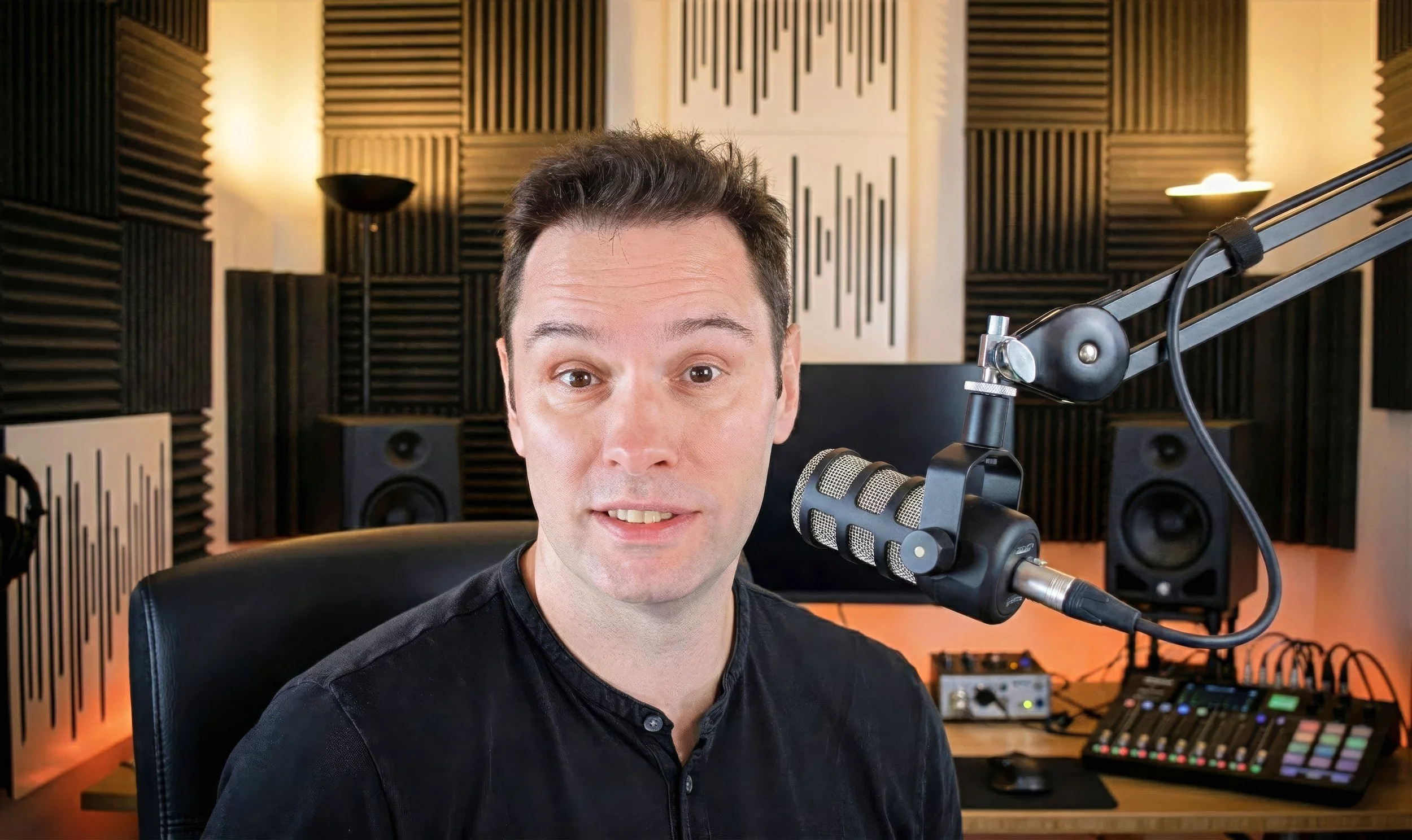
About the Founder
Ed used to be a VC, having led an emerging markets impact fund and a fintech-focused corporate-aligned fund.
He’s been making content for over 20 years. He established an insanely popular football blog in 2002 and its podcast in 2009. He has since recorded and produced more than 1,000 episodes.
Beyond sport, he hosts Sound Investments, a weekly show focused on venture capital, and Showmakers, a podcast dedicated to the craft of podcasting. and The Lost Tapes, a narrative history series. His client work spans entertainment, business, and social impact.
Ed previously held executive roles in startups and corporates across marketing, strategy, and innovation. This mix of operating and creative experience underpins his approach to podcasting as a serious, long-term brand asset.
Ed Barker, Studio 1878
Introduction
In venture capital, reputation determines deal flow. The firms that see the best opportunities first are the ones founders already know, trust, and want to work with.
A well-made podcast is one of the most effective ways to build that relationship before a founder ever reaches out. Sixty minutes of attention, on-demand, in their ear while they run or commute. No other channel gives you that level of access to the exact people you're trying to reach.
But most VC podcasts don't achieve this. They launch with enthusiasm, record a handful of portfolio founder interviews, then the energy fades because nobody planned beyond "we should have a podcast."
This primer is designed to help you avoid that. It covers what makes VC podcasting different, how the best firms use content to fuel their business development engine, and what it takes to build a show that becomes a genuine competitive advantage.
It's written for General Partners, Marketing leads, and Platform teams who are considering podcasting but want to understand the commitment before diving in.
Read this first. Then, if podcasting looks like the right move, work through our interactive planning frameworks to start shaping your strategy. When you're ready to go deeper, book a free strategy call.

01. Why VCs Need Podcasts
The venture capital market is more competitive than ever. There are more firms chasing the same top founders, and capital alone isn't a differentiator. What separates firms that consistently see great deals early from those fighting for allocation later?
Reputation. Visibility. Proof of expertise that founders can verify before they take a meeting.
The deal flow problem
VCs rely on the same channels: warm introductions, their network, and opportunistic outreach. These work, but they're mostly passive. You're dependent on your existing relationships and hoping the right opportunities find you.
A podcast flips this dynamic. You create a consistent stream of content that attracts founders. Every episode is a signal: here's what we think about, here's how we see the market, here's the quality of thinking you'll get if you work with us.
Founders who listen for three months before reaching out already trust you. They know your investment thesis, they've heard you discuss hard decisions, and they've formed an opinion about whether you'd be valuable at their board table.
What podcasts do that other channels can't
Build relationships before the pitch. A founder who's listened to 20 episodes knows how you think, what you care about, and whether they want to work with you. The qualification happens before you ever speak.
Demonstrate domain expertise. Anyone can claim to understand fintech or climate tech. A catalog of 50 episodes interviewing operators, dissecting business models, and discussing hard problems is proof.
Create network effects. Guests promote their episodes. Portfolio companies share content. LPs see evidence of thought leadership. Every episode multiplies your reach.
Reach founders in their natural habitat. The best founders are too busy to read your newsletter, but they listen to podcasts during their commute. You're already in their ears - the question is whether you're using that channel.
Generate content leverage. One podcast episode becomes LinkedIn posts, blog articles, newsletter content, clips for social, YouTube videos. You speak once and publish across every channel your audience uses.
The a16z playbook: content as infrastructure
Don’t copy, build upon. a16z proved that content isn't marketing - it's a core function of firm building. Created your own flywheel:
Content attracts founders and operators who share their worldview
Those relationships generate proprietary deal flow and network effects
Portfolio companies amplify content, strengthening the brand
The ecosystem grows, making your firm more valuable to founders
Content becomes infrastructure that compounds over time
This isn't about blog posts or viral tweets. It's about owning a channel where you consistently demonstrate expertise, build relationships, and create gravity for opportunities.
Podcasting sits at the center of this strategy because it's the most effective format for depth, intimacy, and building trust at scale.
02. Is Podcasting Right For Your Firm?
Podcasting works, but not for every firm. Before you go further, it's worth asking whether the conditions for success exist in your situation.
You need a point of view
Generic VC content is everywhere. "We back exceptional founders" and "We're sector-agnostic" don't cut through. The firms that win with content have a thesis worth sharing - a distinct perspective on market dynamics, founder psychology, or what it takes to build companies in specific domains.
If you're not sure what you'd talk about for 50 episodes, that's worth pausing on. The substance has to be there.
You need consistent executive involvement
The best VC podcasts feature the GPs who make investment decisions. Founders want to hear from the people they'll actually work with, not just the marketing team. This means a partner has to commit - not occasionally, but as a regular part of their workflow.
If that commitment isn't realistic, podcasting probably isn't the right channel.
You need follow-through
The graveyard of abandoned VC podcasts is crowded. A show that stops after 12 episodes doesn't just fail to build an audience - it signals that your firm doesn't finish what it starts. Founders notice.
Consistency matters more than frequency. A monthly show you sustain beats a weekly show you abandon. But you need a realistic plan for keeping it alive through busy quarters, fundraises, and market volatility.
You need patience
Podcasts compound over time. The first 20 episodes are building infrastructure - audience, library, distribution. Real momentum takes 6-12 months. If your firm needs immediate proof of ROI or measures success in quarterly cycles, this won't work.
The payoff is real, but it's backloaded. The question is whether you're willing to invest before you see returns.
Still think podcasting might be right for you?
Work through the Podcast Fit Assessment and our other frameworks to pressure-test your thinking. It takes five minutes and will surface any gaps before you invest further.
If the answer is yes - if you have substance to share, executive commitment, and patience for the long game - the next question is what kind of show you're going to make.

What makes content valuable to founders
Tactical insight they can use. How to structure your first sales comp plan. Navigating a down round. When to hire your first finance person. Applicable knowledge, not platitudes.
Pattern recognition they haven't developed. What breaks at 20 people. How to know when it's time to pivot. Why growth stage hiring fails. Help them see around corners.
Honest conversation about hard things. Co-founder conflict. When to let someone go. Deciding whether to sell the company. The stuff founders don't talk about publicly but think about constantly.
Proof you understand. Demonstrating you know the nuances of their space - not just market size, but real operational challenges and strategic dynamics. It earns credibility.
What successful VC podcasts have in common
They have a clear editorial lens. Not "startup stories" but "how companies scale internationally" or "when technical founders become CEOs" or "the operational side of deep tech."
They ask hard questions. Generic conversations produce generic content. Memorable moments come from pushing beyond stock answers.
They don't sound like investor marketing. The best VC podcasts feel like learning sessions, not showcases. The firm's expertise comes through in the questions and framing.
They're consistent. Founders sub when they know what and when to expect it.
03. What Makes a VC Podcast Worth Listening To?
Most VC podcasts sound the same. A GP interviews portfolio founders about their journey, asks softball questions, and extracts generic startup advice. Informative, maybe. Memorable, rarely.
The shows that cut through have a different quality. They teach you something about how the world works. They surface insights you can't easily get elsewhere. They make you think differently about a problem you're facing.
The mistake most VC podcasts make
They optimize for the guest, not the listener. They use the show to spotlight portfolio companies, network with LPs, or create content for fundraising decks. These are all reasonable goals, but they produce podcasts founders don't want to listen to.
The best VC podcasts serve the audience first. They ask: what would make a founder tune in every week? What conversation would they seek out even if they weren't looking to raise capital?
When you get that right, everything else follows. Founders listen, share episodes with their network, and think of you when it's time to fundraise. But the content has to be genuinely valuable.

04. The Role of Storytelling
Data informs, but stories stick. This is as true in venture capital as anywhere else.
When founders talk about their companies, they often default to metrics and milestones: funding raised, customers acquired, revenue growth. These facts matter, but they're not what makes a conversation compelling.
What makes content memorable is the story underneath the metrics. The moment the founder realized their initial thesis was wrong. The board meeting where everything almost fell apart. The hire that changed the trajectory of the company.
Why storytelling matters in VC content
Most startup content is interchangeable. Lessons about resilience, advice about perseverance, observations about market timing. These points are valid but forgettable because they're abstract.
Story makes insight specific. Instead of "hiring is hard," you hear about the VP of Sales who seemed perfect in interviews but couldn't translate strategy into execution, and the painful six months it took to admit the hire wasn't working. That's what founders remember.
The same principle applies to how VCs talk about their own experience. "We pattern match" is a statement. The story of seeing three similar companies fail for the non-obvious reason is insight.
→ Work through this Storytelling Framework and apply it to your show concept.
→ For a deeper dive, watch our five-part Storytelling Video Series, which covers story structure, finding story in recordings, shaping narrative in the edit, and building storytelling into your process.
Finding story in VC conversations
The skill isn't inventing drama - it's recognizing the moments that already matter and drawing them out.
Every founder has turning points: when they realized they needed to change course, when they made a bet that could have destroyed the company, when they learned something that reshaped how they operate. These are the inflection points worth exploring.
The questions that unlock stories usually start with "when" or "what happened":
When did you realize your first product wasn't going to work?
What happened after that board meeting?
Walk me through the decision to bring on a co-founder.
Generic questions produce generic answers. Specific questions about specific moments produce stories.
The basics of story structure
Every effective story has the same underlying shape: someone wants something, something's in the way, something changes.
In a VC context, this might look like: founder wants to crack enterprise sales; they can't get meetings with decision makers; they realize their positioning is wrong and pivot their messaging.
Or: you wanted to invest in a company; the founder had competitive term sheets from tier-one firms; you spent three hours walking them through how you'd help with international expansion and earned the allocation.
The structure is simple, but it's what separates a story from a summary. It creates tension, gives the audience a reason to keep listening, and delivers a resolution that means something..
05. Getting Started: A Practical Roadmap
-
![Sunset over a mountain range with layered silhouettes and a pinkish-orange sky.]()
1. Design Your Show
Before you record, get clear on three things: who you're making this for, what value you're offering, and how you'll know it's working.
Audience definition should be specific. Not "founders" but "technical founders in enterprise software navigating their first go-to-market hire." The tighter your focus, the easier it is to create content that resonates.
Value proposition is the reason someone subscribes. Not "we interview successful founders" but "tactical insights on scaling from 10 to 100 people from operators who've done it." Make the benefit clear and specific.
Success metrics should reflect your actual goals. Downloads measure reach. Episode retention measures quality. Inbound founder inquiries that mention the podcast measure business impact. Newsletter sign-ups from show notes measure list growth. Decide what matters before you launch.
For VCs, success often looks like: founders mentioning the podcast in pitch meetings, increased inbound from relevant segments, LPs referencing the show as evidence of thought leadership, or portfolio companies asking to be guests.
→ Work through the Positioning Statement Builder to sharpen your thinking.
-
![Layered mountain range during sunset with pink and orange sky.]()
2. Choose Your Format
Format decisions shape everything: how much work each episode takes, who needs to be involved, and what the show feels like.
GP-hosted interviews are the most common format. You bring on founders, operators, or domain experts and facilitate conversation. Requires strong hosting skills and consistent GP availability. Works best when you have something interesting to say, not just questions to ask.
Founder-to-founder conversations (hosted by a portfolio founder) can work if you have someone with natural hosting ability and interesting peers. Less formal, often more candid, but you lose direct GP visibility.
Co-hosted VC discussion works when you have two partners with genuine chemistry and distinct perspectives. Allows for debate and deeper exploration but requires both partners to commit long-term.
Solo GP monologue is hardest to sustain but distinctive when done well. All the weight is on one person's ability to deliver insight, stories, and perspective without another voice to bounce off.
Panel or roundtable with other VCs or operators can work for specific topics but is harder to schedule and produce consistently.
Decide on episode length and cadence based on audience behavior, not your capacity. Founders will listen to 60 minutes if the content is good. But 45 minutes weekly is better than 90 minutes inconsistently.
→ Use the Format Explorer to think through your options.
-
![Layered mountain range at sunset with orange sky]()
3. Plan Your Launch
Record at least five episodes before you publish anything. New listeners who find your show should have something to binge. A single episode isn't enough to build a habit.
Your first few episodes set expectations for the entire show. Make them strong. Feature compelling guests, tackle substantive topics, and demonstrate the quality and focus that will define the series.
Submit to all major platforms: Apple Podcasts, Spotify, Amazon Music, YouTube. Create a landing page on your firm's site with embedded players and episode notes. Make it easy to find, easy to share, easy to subscribe.
Plan a launch push: Email your LP list, post across LinkedIn and Twitter, leverage your network and portfolio. Ask guests to share, build a kit with assets. Coordinate with your platform team if you have one. The goal is to get initial momentum and signal that this is a priority.
But remember: Launch day is the starting gate, not the finish line. Most podcast growth happens slowly, episode by episode, not in a spike on day one. The show that wins is the one that keeps going.
→ Discuss your audience growth strategy. Book a free strategy call today.
-
![Layers of mountain ranges at sunset or sunrise, with a warm orange glow in the sky.]()
4. Speak Once, Publish Many
A podcast episode is raw material, not just an end product. Every conversation can become LinkedIn posts, blog articles, newsletter content, clips for social, YouTube videos, pull quotes, and audiograms.
This is how the content flywheel works: you invest an hour in a conversation, and you extract 10+ pieces of content from it.
Build repurposing into your workflow from the start. If you record on Tuesday, you should know exactly what gets made from that episode by Friday. This isn't extra work - it's the multiplier that makes podcasting efficient.
Make it easy for guests to amplify. Send them assets ready to share: clips, quote graphics, social copy. Most guests want to promote their appearance - remove the friction and they will.
Feed your other channels. Your newsletter gets episode highlights. Your LinkedIn gets insight threads extracted from conversations. Your blog gets long-form analysis built from podcast themes. Everything connects.
→ Map out your content system with the Repurposing Framework.
-
![Sunrise over a layered mountain range with dark peaks in the foreground and lighter peaks in the background, all bathed in warm orange and yellow hues.]()
5. Measure and Improve
The best metric for a VC podcast isn't download numbers - it's whether founders mention the show when they reach out to your firm. That said, you still need to track performance to understand what's working and where to improve.
Downloads per episode give you a baseline. Track early downloads (first 7 days) to see how many subscribers you're building. Track total downloads over time to see if your library is growing as an asset.
Retention rate tells you if people actually listen. If completion rates are consistently below 60%, something's wrong - probably your pacing, your guest selection, or your editing. Retention in the 70-80% range suggests your content is holding attention.
Follower growth on podcast platforms shows whether people want more after listening to one episode. This is your best signal of quality.
Attribution signals are harder to track but more important. Inbound founder inquiries that mention podcast. Referral traffic from show notes. Newsletter sign-ups driven by episodes. LPs or portfolio companies who reference show. Founders who bring up specific episodes.
Share results internally. GPs need to see evidence that this is working - especially qualitative wins like founder feedback or attribution signals. The show needs ongoing executive support, and visibility helps maintain that.
→ Use the Analytics Framework to build your measurement approach.





06. Measuring What Matters
Podcast analytics have a reputation for being limited, and for years that was true. Downloads told you almost nothing about who was listening or whether they cared.
That's changing. Platforms and third-party tools now offer retention data, follower metrics, and increasingly, anonymized audience-level insights like job titles and industries. The measurement picture is better than it used to be.
But more data doesn't automatically mean better decisions. The challenge for VC podcasts isn't access to metrics - it's knowing which ones actually matter for deal flow.
The hierarchy that matters
Think about measurement in three tiers:
Downloads tell you if people showed up. Track them per episode and over rolling time periods. Early downloads are your best signal of momentum. But downloads alone don't tell you much about quality or impact.
Retention tells you if they stayed. Completion rates in the 70-80% range suggest your content is holding attention. Early drop-off usually points to weak hooks or slow intros. This is where you learn whether your show is actually compelling or just getting sampled.
Founder action tells you if it mattered. This is the hardest layer to measure and the most important. What do founders do after listening?
Do they visit your firm's site?
Do they sign up for your newsletter?
Do they mention the podcast when they reach out?
Do they reference specific episodes in pitch meetings?
These signals are noisy and hard to track systematically, but they're what determine whether your podcast is actually generating deal flow. The richness of podcast listener data is improving and its often possible to track detailed location, organisation and other behavioural signals.
The attribution problem
Podcasts rarely drive immediate, trackable conversion. A founder listens for three months, builds trust, then reaches out for seemingly unrelated reasons. The podcast influenced the outcome, but it won't show up in your CRM attribution data.
Accept this early. Look for influence, not last-touch credit. "I've been listening to your show" is a data point even if it doesn't fit in a dashboard. Train your team to ask founders how they first heard about your firm. Track anecdotal evidence.
The firms that win with content understand that podcasting is reputation infrastructure, not performance marketing. You're building visibility and trust over time, not optimizing for clicks.
What to actually measure
Pick a small set of metrics tied to your actual goals:
Downloads (as a baseline)
Retention rate (as a quality check)
Follower growth (as proof of repeat interest)
Referral traffic to your site (as a conversion signal)
Inbound founder inquiries that mention the podcast (as attribution)
Review them consistently. Adjust your content based on what you learn. Share wins internally to maintain executive support.
The point of analytics is learning, not justification. A show that improves over time will outperform one that optimizes for vanity metrics.
→ Use the Analytics Framework to define your measurement approach.
07. Resources and Budget
One of the most common questions we hear is "what does a podcast actually cost?" The honest answer is: it depends on what you're building and how much you're doing in-house. But that's not very helpful, so here's a realistic breakdown of what's involved.

Time commitment
This is where most firms underestimate. A podcast isn't just recording - it's preparation, production, promotion, and ongoing management.
For a typical GP-hosted interview show:
Guest research and booking: 2-4 hours per episode (more if you're reaching outside your network)
Preparation and briefing: 1-2 hours
Recording: 1 hour (usually produces 40-50 minutes of content)
Editing and production: 3-6 hours depending on polish level
Show notes, assets, and publishing: 1-2 hours
Promotion and repurposing: 2-4 hours
A biweekly show can require 15-20 hours per episode when you account for everything. This is why most successful VC podcasts either have a dedicated producer or work with an external production team.
Monthly cadences are more sustainable if you're trying to manage everything in-house.
The production spectrum
Not every podcast needs the same level of production. Understanding where you sit helps you budget appropriately.
Basic: Clean audio, simple edits, minimal post-production. Works for shows where the content and conversation carry the weight. Lowest cost, fastest turnaround. Can work for internal distribution or LP-focused content but may not be polished enough to attract founders.
Polished: Tight editing, consistent levels, intro/outro music, basic sound design. The standard for most professional VC podcasts. Noticeably better than basic without being expensive. This is where most firms should land.
Premium: Narrative structure, sound design, music licensing, extensive editing. Think documentary or story-driven formats like "Acquired" or "How I Built This." Significantly higher cost and time investment, but distinctive. Only worth considering if you have a unique editorial vision and the resources to sustain it.
Most VC podcasts sit in the "polished" category. That's usually the right balance of quality and sustainability.
Cost ranges
Costs vary by market, scope, and whether you're building in-house capability or working with a production partner.
In-house: If someone on your team has time and basic skills, your costs are mainly equipment ($500-$2,000 for a good setup), software ($20-$100/month), and hosting ($15-$50/month). The trade-off is time and learning curve. Most firms underestimate how long production takes when they're starting out.
Freelance editor: $300-$600+ per episode for basic editing and show notes. More for polish, assets, or additional services.
Production agency (per-episode model): $750-$2,500+ per episode depending on format complexity and services included. Usually covers editing, production, show notes, and basic assets.
Full-service partnership: Monthly retainers typically range from $3,000-$15,000+ depending on scope - strategy, production, guest booking, promotion, repurposing. Best for firms that want a hands-off solution or lack internal capacity.
These are rough ranges to help you plan. Actual costs depend on your format, ambitions, and market.
What you need to get started
At minimum: a decent microphone or access to a studio; recording software or a platform like Riverside; a hosting platform; someone responsible for making it happen.
Podcasts fail more often from lack of ownership than lack of budget. Assign clear accountability from day one.
Build or buy?
Some firms want full control and build internal capability - hiring a producer or assigning platform team resources. Others prefer to outsource production and focus on being the voice and face of the show.
Many start with external support and bring pieces in-house over time as they learn what's involved.
There's no right answer, but be realistic about your team's capacity before assuming you'll do it all yourself. Most VCs drastically underestimate how much work is involved in making a podcast that actually stands out.